Propylene, also known as methyl ethylene, is a colorless and flammable gas with a slightly sweet odor. It has a melting point of -185.2°C, a boiling point of -47.4°C, and a liquid-state relative density of 0.5193. Propylene can be easily liquefied under suitable conditions.
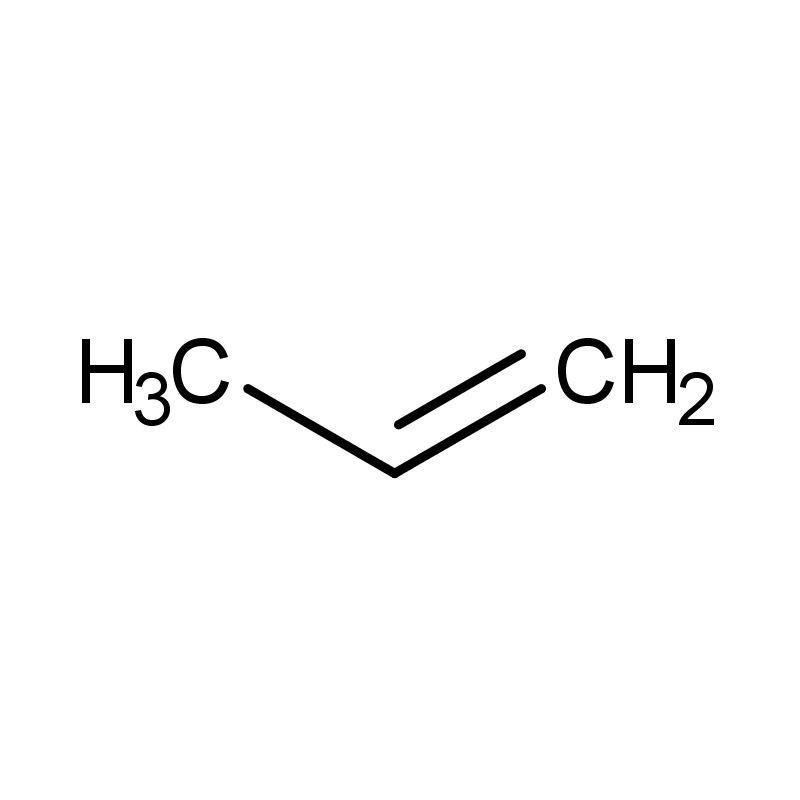
As the second member of the olefin family, propylene has the structural formula CH₂=CHCH₃ and is one of the most important organic chemical raw materials, following ethylene and benzene. It is mainly obtained from gases generated through thermal cracking and catalytic cracking processes and is also produced as a byproduct during light oil cracking for ethylene production.
Propylene is widely used as a key feedstock for the manufacture of acrylonitrile, polypropylene, ethylene-propylene rubber, propylene oxide, acetone, and other synthetic resins, synthetic rubbers, synthetic fibers, and plastic materials. It is insoluble in water but readily soluble in organic solvents.
| Melting point | -185 °C(lit.) |
| Boiling point | -47.7 °C(lit.) |
| Density | 1.49 |
| Vapor density | 1.48 (vs air) |
| Vapor pressure | 15.4 atm (37.7 °C) |
| Refractive index | 1.3567 |
| Flash point | -108°C |
| Acidity coefficient (pKa) | 43(at 25℃) |
| Form | colorless gas |
| Odor threshold (Odor Threshold) | 13ppm |
| Explosion limits | 11.10% |
| Water solubility | 0.33g/L(25 °C) |
| Freezing point | -185.25℃ |
| Thermal conductivity | 0.11 W/(m.K) |
| Merck | 137,941 |
| BRN | 1696878 |
| Henry's Law Con stant | 5.6x10⁻⁵ mol/(m3Pa) at 25°C, Plyasunov and Shock (2000) |
| Dielectric constant | 1.9 (20С) |
| Stability | Stable. Highly flammable. Easily forms explosive mixtures with air. Incompatible with strong oxidizers, strong acids, and halogens. |
| InChI | 1S/C3H6/c1-3-2/h3H,1H2,2H3 |
| InChIKey | QQONPFPTGQHPMA-UHFFFAOYSA-N |
| SMILES | CC=C |
| LogP | 1.77 at 20℃ |
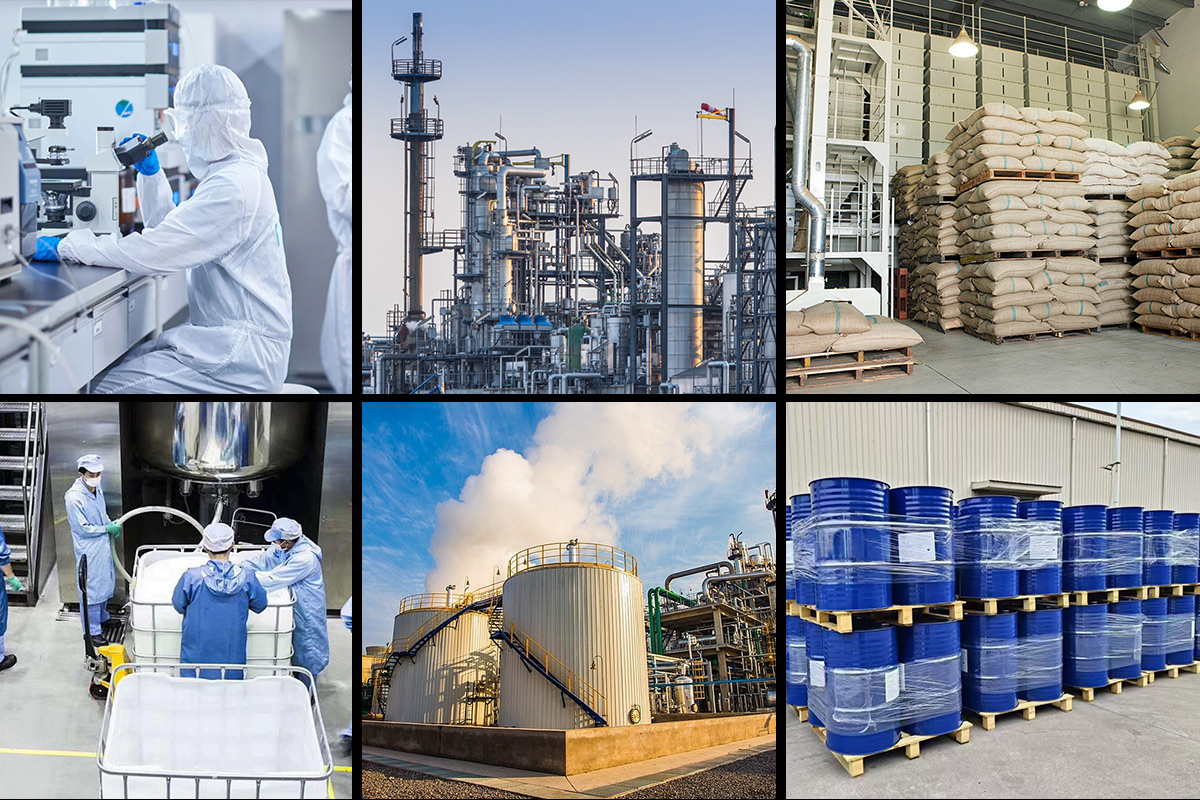
Propylene is a crucial chemical feedstock with a wide range of industrial applications. Through gas-phase oxidation of propylene, acrolein can be produced and further used in the synthesis of acrylic acid, allyl alcohol, glyceraldehyde, hydroxyacetaldehyde, and methionine, an important additive for food and animal feed.
Acrylonitrile, produced through the ammoxidation of propylene, serves as a key raw material for manufacturing synthetic fibers, synthetic rubber, and plastics. Chlorination of propylene produces allyl chloride, which can be further converted into allyl alcohol, dichlorohydrin, and chloropropionitrile, with applications in the production of glycerol, epoxy resins, chlorohydrin rubber, and surfactants.
The alkylation of propylene produces cumene, an essential intermediate for phenol production, while acetone is generated as a co-product during phenol manufacturing. Propylene can also undergo carbonylation to produce n-butyraldehyde and isobutyraldehyde, which serve as intermediates for various organic synthesis processes involving plasticizers, dyes, solvents, and pesticides.
Hydration of propylene produces isopropanol, which is further utilized in the production of acetone, isopropylamine, and isopropyl esters. In addition, propylene can undergo dimerization, trimerization, polymerization, and tetramerization reactions to produce valuable products such as ethylene, propylene derivatives, polypropylene, and dodecene, the latter serving as an important intermediate for surfactant production.