
Products Description of Vitamin A (Retinol)
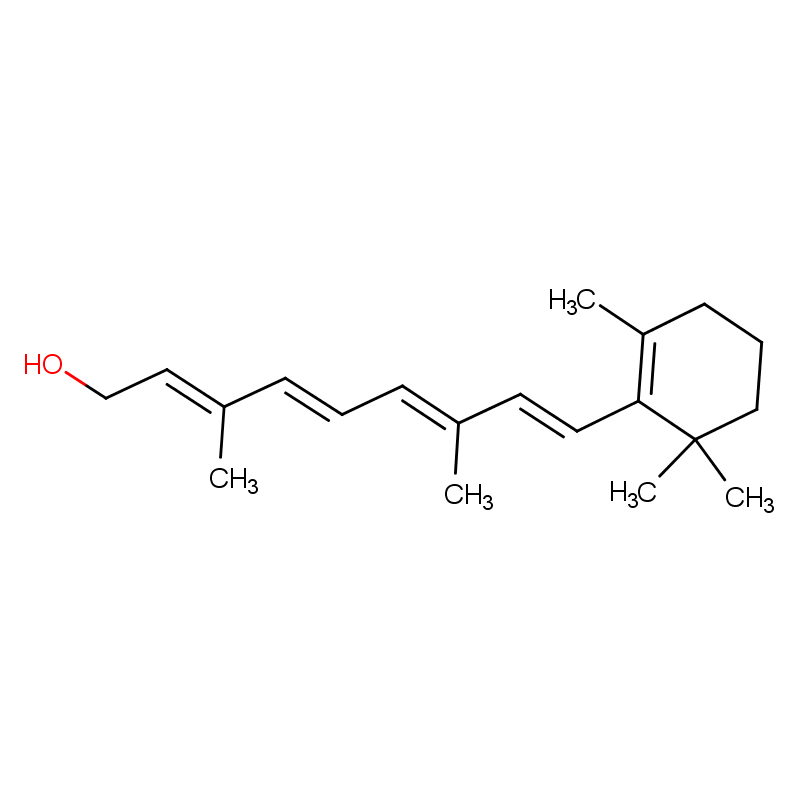
Vitamin A, chemically referred to as retinol, is the first vitamin identified and is an essential nutrient with important biological functions. It exists mainly in two forms: retinol (vitamin A alcohol), the active form of vitamin A found exclusively in animal-derived foods, and carotenoids such as β-carotene.
Vitamin A is an unsaturated monohydric alcohol containing an ester ring and includes two closely related forms, vitamin A₁ and vitamin A₂, which share similar molecular structures. Retinol can be produced from plant-derived β-carotene. In the human body, β-carotene is enzymatically converted into two molecules of retinal through the action of β-carotene-15,15'-dioxygenase. Retinal is then further reduced to retinol by retinal reductase. Due to its ability to serve as a precursor of vitamin A, β-carotene is also known as provitamin A.
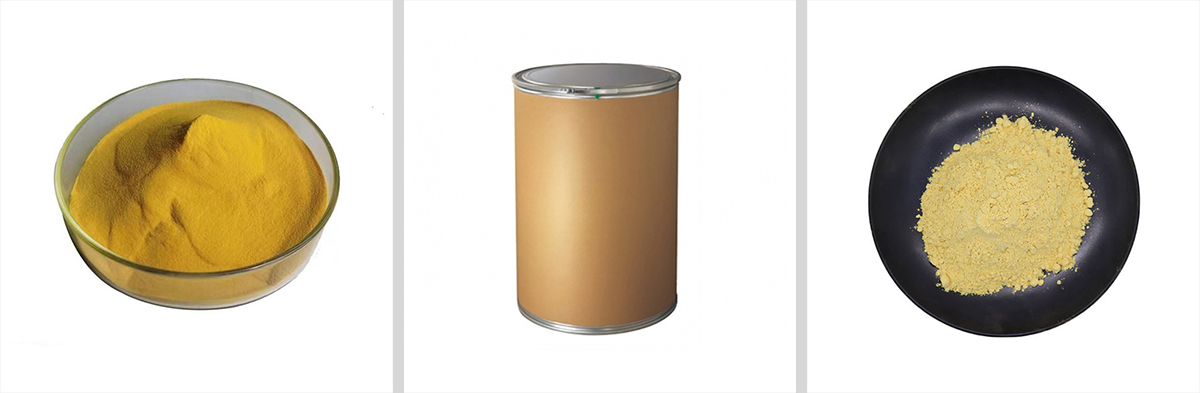
| English Name | Vitamin A |
| English Synonyms | Aquasol A;ROIDEX;Vitamin A Retinol;3,7-Dimethyl-9-(2,6,6-trimethyl-1-cyclohexenyl)-nona-2,4,6,8-tetraen1-ol;Water-soluble vitamin A;VITAMIN A 500W;Vitamin A USP/EP/BP;New anti-aging products |
| CAS Number | 11103-57-4 |
| Molecular Formula | C20H300 |
| Molecular Weight | 286.46 |
| EINECS Number | 234-328-2 |
| Storage conditions | -20 ℃ |
| Solubility | All retinyl esters are practically insoluble in water, soluble or partially soluble in anhydrous ethanol, and miscible with organic solvents. Vitamin A and its esters are highly sensitive to the effects of air, oxidants, acids, light, and heat. Perform tests and examinations as soon as possible, avoiding exposure to photochemical light and air, oxidants, oxidizing catalysts (e.g., copper, iron), acids, and heat; use freshly prepared solutions. |
| Cosmetic ingredients and efficacy | Skin Care - Other |
| InChI | InChI=1S/C20H300/c1-16(8-6-9-17(2)13-15-21)11-12-19-18(3)10-7-14-20(19,4)5/h6,8-9,11-13,21H,7,10,1 4-15H2,1-5H3/b9-6+,12-11+,16-8+,17-13+ |
| InChIKey | FPIPGXGPPPQFEQ-OVSJKPMPSA-N |
| SMILES | C1(/C=C/C/C)=C/C=C/C/C)=C/CO)=C(C)CCCC1(C)C |

Vitamin A is a fat-soluble vitamin, and its biological activities are mainly carried out through its active metabolite, retinoic acid. Carotene serves as an important precursor of vitamin A, among which β-carotene has the highest biological activity. However, its absorption and utilization efficiency in the human intestine is only about one-sixth of that of vitamin A.
Vitamin A is primarily stored in the liver, which contains approximately 90%–95% of the body’s total vitamin A reserves, while a smaller amount is stored in adipose tissue. As an essential nutrient involved in various metabolic processes, vitamin A plays a vital role in maintaining normal physiological functions. A lack of sufficient dietary vitamin A intake, insufficient dietary fat consumption, or long-term digestive disorders may result in vitamin A deficiency, potentially affecting multiple physiological processes and leading to related health problems.