
Products Description of Propylamine
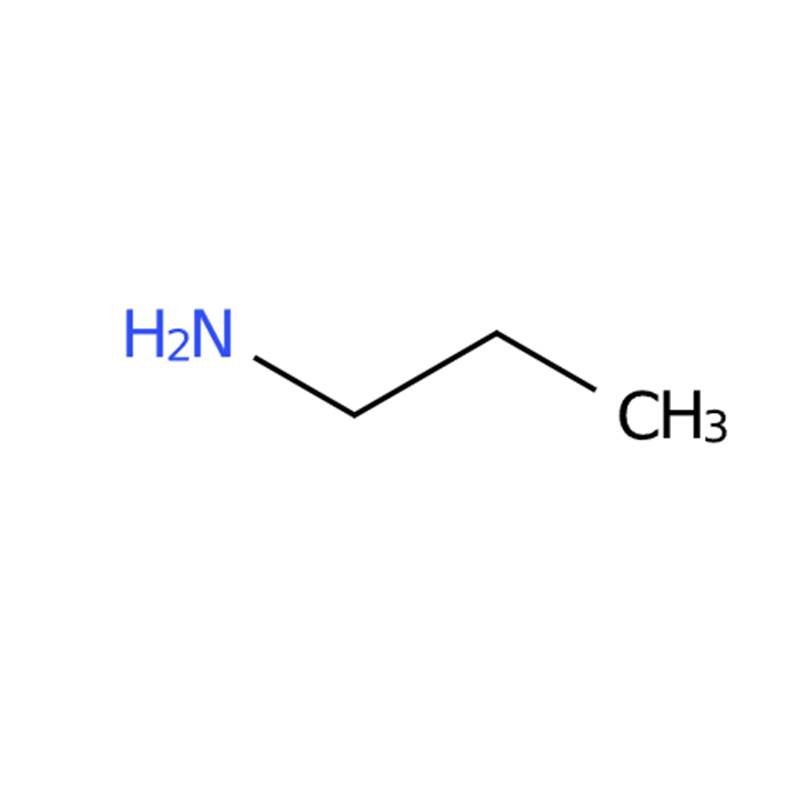
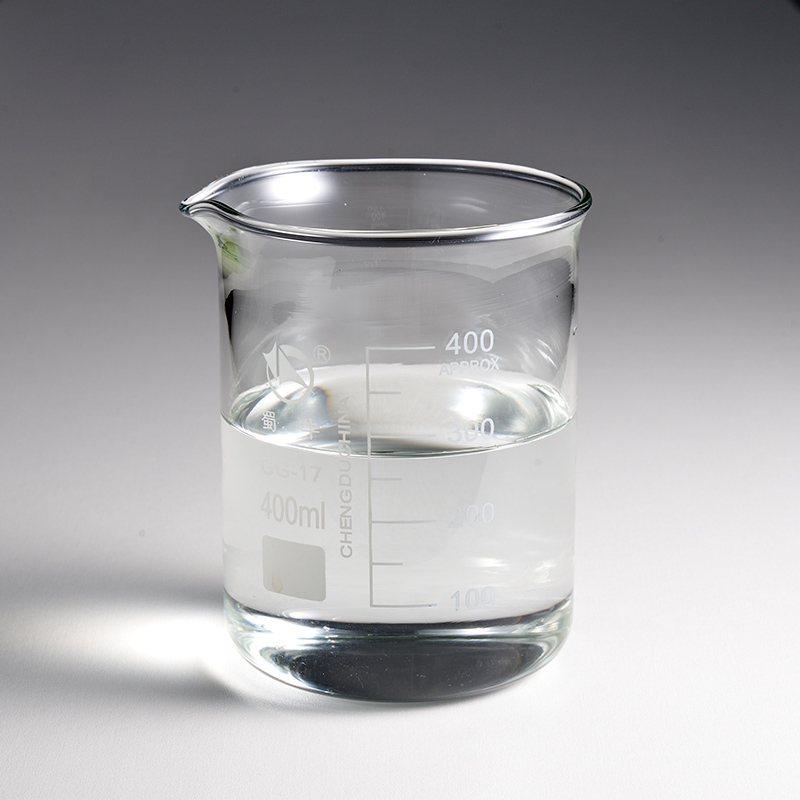
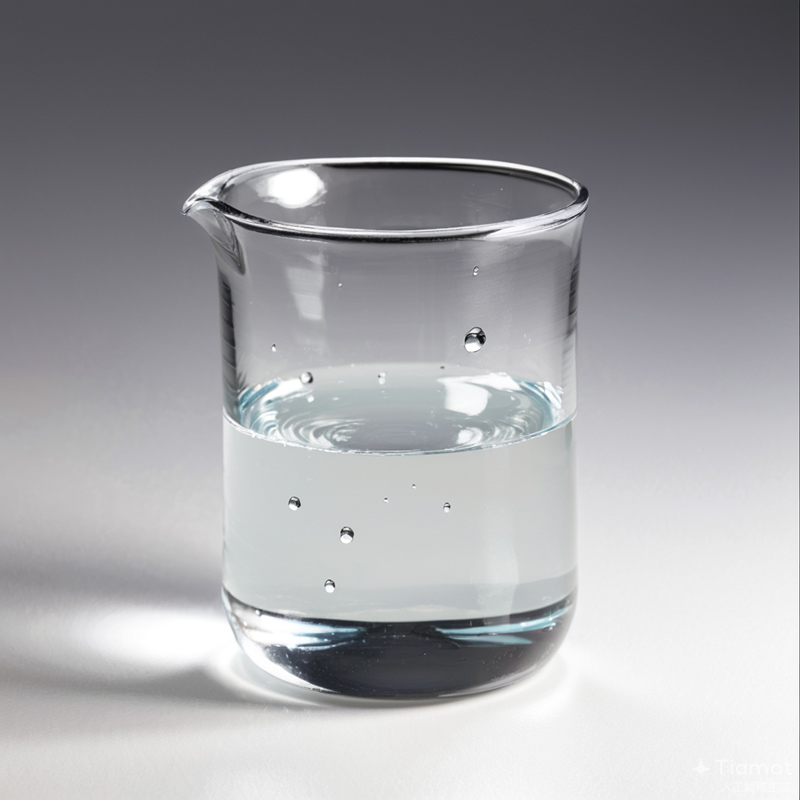
Propylamine is a primary amine compound with the molecular formula C₃H₇NH₂. It appears as a colorless, transparent liquid with a distinctive ammonia-like odor. It has good solubility in various solvents, including water, ethanol, ether, acetone, and benzene. Propylamine is used as an important intermediate in the synthesis of pyrimidine derivatives as a novel and highly effective PDE4 inhibitor. It is also applied in the preparation of fluorenone analogs containing DNA topoisomerase I inhibitors.
| Melting point | -83 °C (lit.) |
| Boiling point | 48°C (lit.) |
| Density | 0.719 g/mL at 25 °C (lit.) |
| Vapor density | 2 (vs air) |
| Vapor pressure | 4.79 psi (20°C) |
| Refractive index | n20/D 1.388(lit.) |
| FEMA | 4237 | PROPYLAMINE |
| Flash point | -35 °F |
| Storage conditions | Store below +30°C. |
| Solubility | Solubility in water: 0.4 parts (lit.) |
| Acidity coefficient (pKa) | 10.6(at 20°℃) |
| Form | liquid |
| Specific gravity | 0.7173 |
| Color | Transparent and colorless to pale yellow |
| pH value | 12.6 (100g/l, H2O, 20℃) |
| Odor (Odor) | The smell of ammonia |
| Fragrance type | ammoniacal |
| Odor threshold (Odor Threshold) | 0.061ppm |
| Biological origin | human blood |
| Explosion limits (explosvlm) | 2.1-13.6%(V) |
| Water solubility | soluble |
| Specific heat capacity | Cp(liquid): 2.78 J/(g-K); Cp(gas): 1.54 J/(g-K), at 25C |
| Sensitivity | Air Sensitive |
| JECFA Number | 1580 |
| Merck | 147,843 |
| BRN | 1098243 |
| Henry's Law Con stant | 6.6x10⁻¹ mol/(m3Pa) at 25°C, Burkholder et al. (2019) |
| Exposure Limits | No exposure limit has been set. Based on its similarity to ethylamine in irritation and toxicity, a TLV-TWA of 10 ppm (~24 mg/m3) should be appropriate.. |
| Dielectric Constant | 3.0 (Ambient) |
| Stability | Stable. Highly flammable. Caution: Low flash point. Easily forms explosive mixtures with air. Incompatible with oxidizers and strong acids. Store in a cool place. |
| InChI | 1S/C3H9N/c1-2-3-4/h2-4H2,1H3 |
| InChIKey | WGYKZJWCGVVSQN-UHFFFAOYSA-N |
| SMILES | CCCN |
| LogP | 0.55 |

Product Application of Propylamine
Propylamine is an important organic synthesis raw material widely used in pharmaceuticals, coatings, textiles, resin finishing agents, petroleum additives, and preservatives. It is also utilized as a chemical reagent in various applications.
n-Propylamine serves as a key intermediate in organic synthesis and is applied in industries such as pesticides, rubber, fibers, textiles, resin finishing agents, petroleum additives, and preservatives. In the pesticide field, it is used for the production of fungicides and can also serve as a raw material for synthesizing herbicides such as chlorfluazuron and cyclopropoxyl. Compared with di-n-propylamine, mono-n-propylamine has relatively fewer important applications.