
Shellac CAS#9000-59-3
Payment Terms: T/T only for orders. Please contact us for detailed payment terms and order requirements.
Natural Resin Origin – Shellac is a natural resin available in a range of colors from light yellow to dark red, offering a naturally derived material for diverse applications.
Wide Variety of Grades – Shellac is available in numerous grades, including bleached, dewaxed, decolorized, orange, purified, refined, wax-containing, and white shellac, providing flexibility for different formulation requirements.
Versatile Physical Forms – Shellac is supplied as hard, brittle flakes that can be crushed or milled into coarse or fine powders, while bleached shellac is available as a coarse off-white powder.
Neutral Sensory Profile – Shellac is tasteless and may have only a faint odor, with its characteristic aroma resulting from a complex fragrance system.
Shellac CAS#9000-59-3
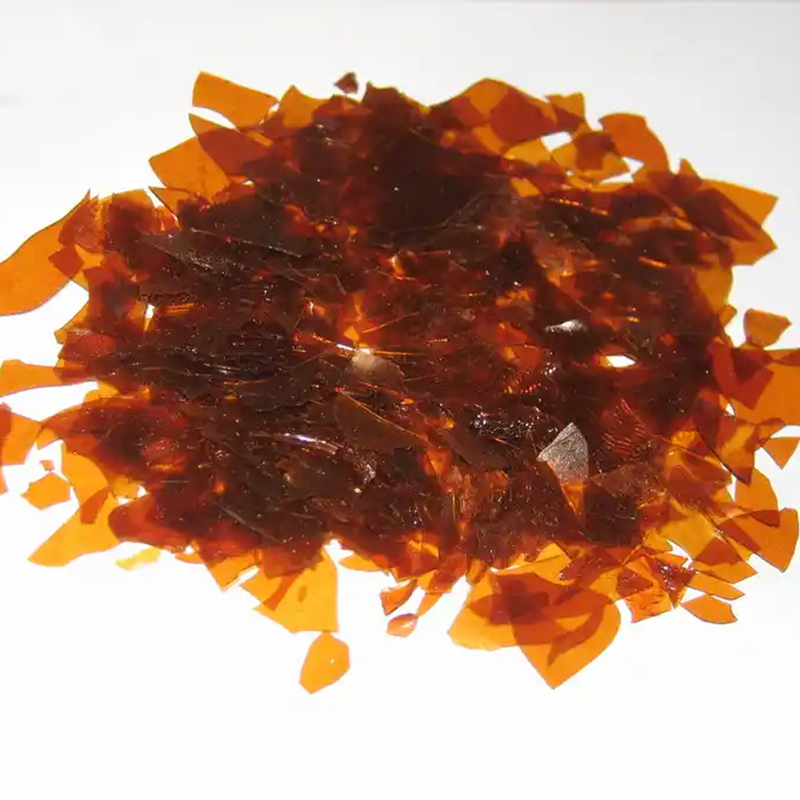
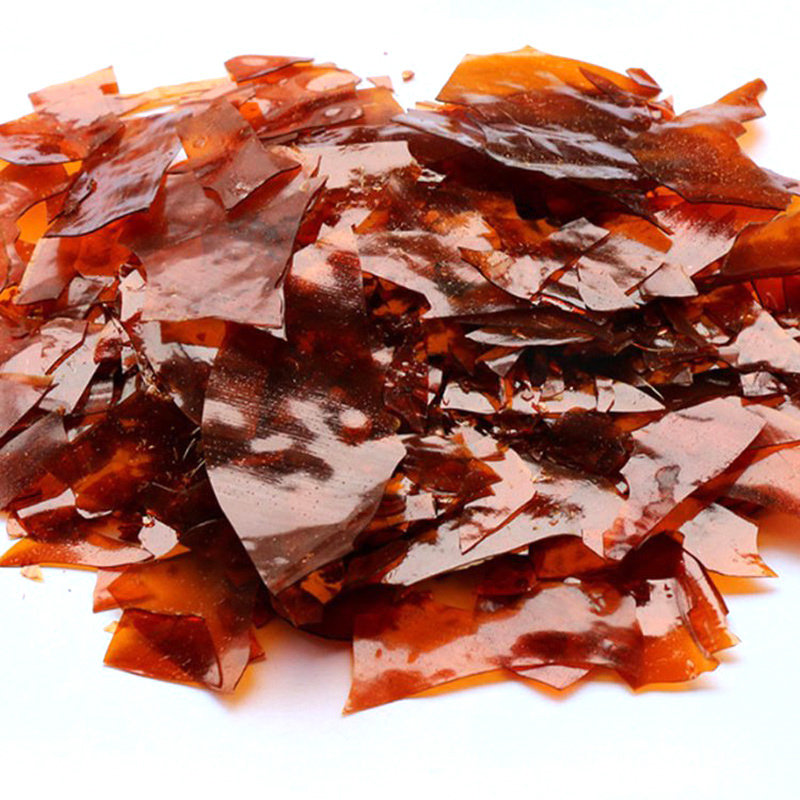
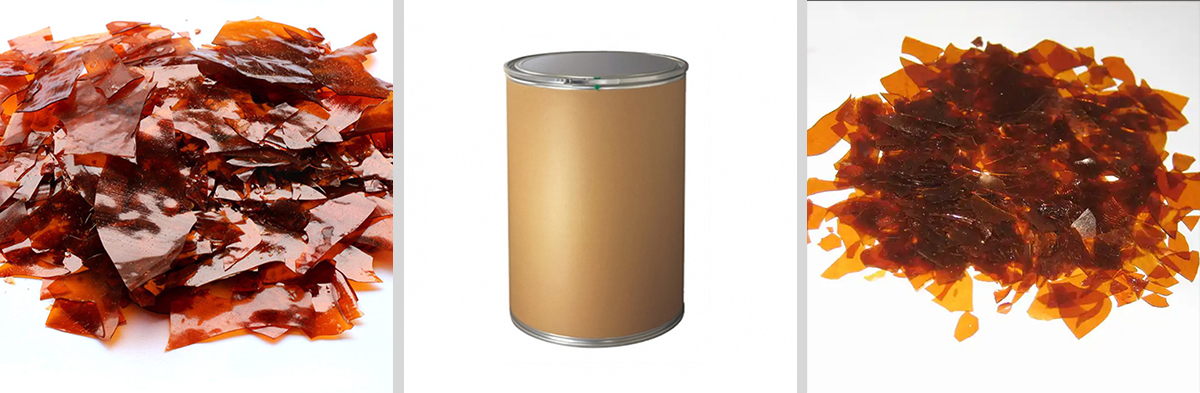
Shellac is a natural resin available in a range of colors from light yellow to dark red. Depending on the refining process, it is supplied in the form of hard, brittle flakes that may contain wax or be wax-free.
Various types of shellac are available, including bleached shellac, bleached dewaxed shellac, dewaxed and decolorized shellac, dewaxed flake shellac, dewaxed orange shellac, dewaxed shellac, orange shellac, purified shellac, refined bleached shellac, regular bleached shellac, regular waxy shellac, wax-containing shellac, and white shellac.
Shellac flakes can be crushed or milled into coarse or fine powder. Bleached shellac is typically supplied as a coarse off-white powder.
Shellac is tasteless and may have a faint odor. Its characteristic odor is attributed to a complex fragrance system.
Shellac Chemical Properties
| Melting point | 115-120° |
| density | 1.035-1.140 |
| storage temp. | 2-8°C |
| solubility | Practically insoluble in water, gives a more or less opalescent solution (wax containing shellac and bleached shellac) or a clear solution (dewaxed shellac and bleached, dewaxed shellac) in anhydrous ethanol. When warmed it is sparingly soluble or soluble in alkaline solutions. |
| Odor | mild woody |
| Dielectric constant | 2.0(Ambient) |
| Stability: | Stable. Incompatible with strong oxidizing agents. |
| Major Application | pharmaceutical |
| Cosmetics Ingredients Functions | BINDING |
| SKIN CONDITIONING - EMOLLIENT | |
| FILM FORMING | |
| VISCOSITY CONTROLLING | |
| HAIR FIXING | |
| CAS DataBase Reference | 9000-59-3 |
| EPA Substance Registry System | Shellac (9000-59-3) |
| WGK Germany | 3 |
| TSCA | TSCA listed |
| HS Code | 1301900190 |
| Storage Class | 11 - Combustible Solids |

Product Application of Shellac CAS#9000-59-3
Shellac is widely used as a moisture-barrier coating for tablets and pellets due to its low permeability to water vapor and oxygen. It is commonly applied in the form of alcoholic or aqueous solutions, often referred to as pharmaceutical glazes. However, the stability issues associated with alcoholic shellac solutions have limited its use in the pharmaceutical industry for modified-release and enteric coatings.
Shellac, particularly newer aqueous shellac solutions, is primarily used in food products and nutritional supplements. Recent research has demonstrated favorable application properties and chemical stability of shellac films prepared from aqueous shellac solutions. Aqueous ammonium shellac solutions based on dewaxed orange shellac do not exhibit the stability issues associated with alcoholic shellac solutions and can be used as enteric coatings for pellets, tablets, and both soft and hard gelatin capsules, particularly in nutritional supplements.
Shellac is also a key ingredient in pharmaceutical printing inks for capsules and tablets and can be applied as a 40% w/v alcoholic solution. In addition, it can be used to apply one or two sealing coats to tablet cores, helping protect them from moisture before subsequent film or sugar coating.
Other applications include coating or encapsulating powders and granules, such as those used in probiotic products. Before the introduction of film-coating technology, a combination of shellac, cetostearyl alcohol, and stearic acid was used as an enteric coating.
In cosmetics, shellac is used in formulations such as hairsprays, mascaras, and lipsticks. Aqueous shellac solutions are also used in colonic drug-delivery applications.