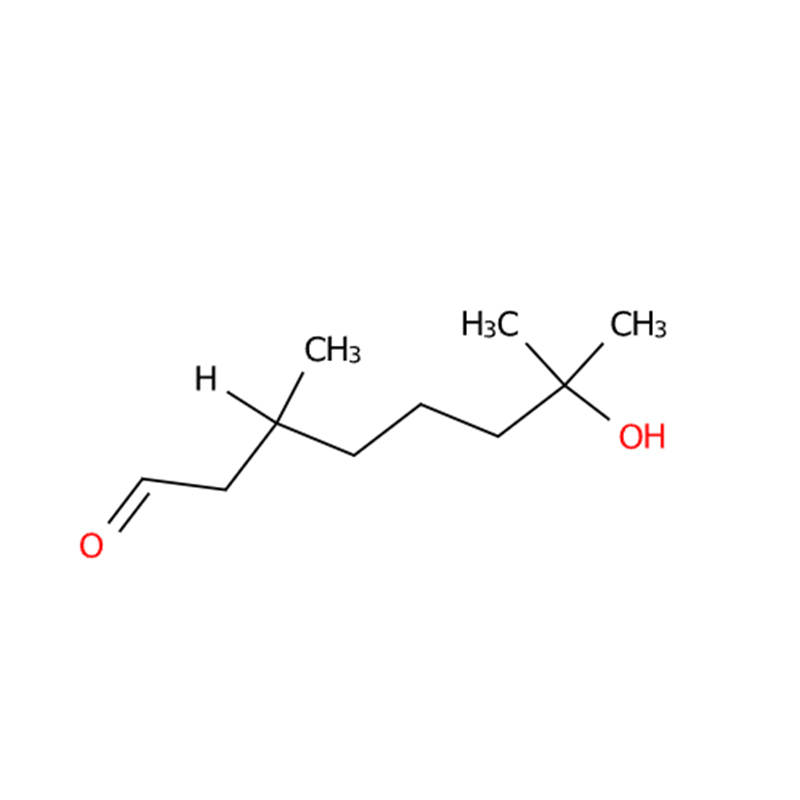

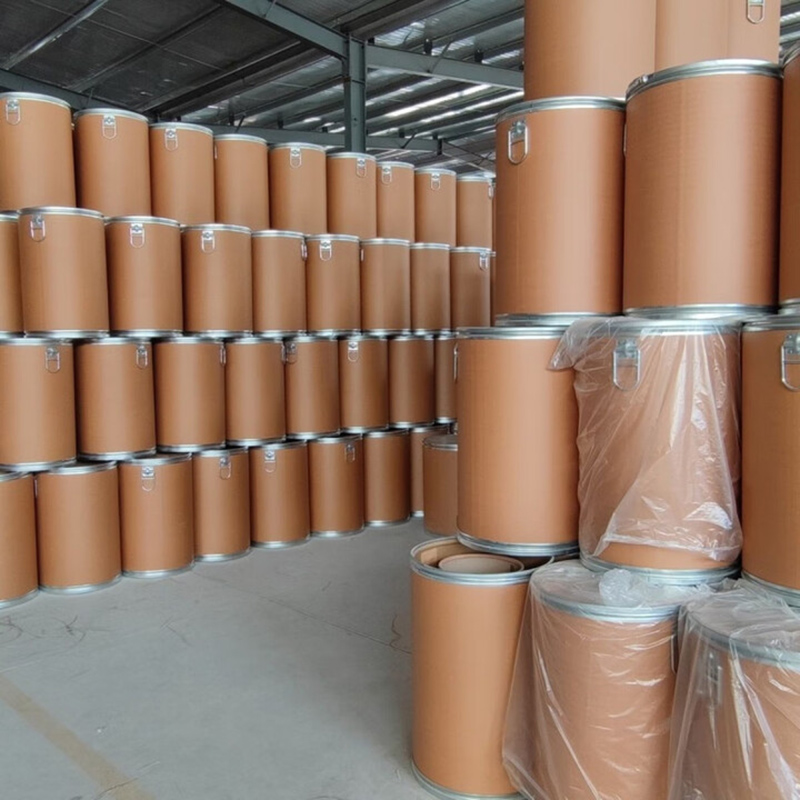
3,7-Dimethyl-7-hydroxyoctanal CAS#107-75-5
Hydroxycitronellal has an intense, sweet, floral, lily-type odor. It can be prepared through the hydration of natural citronellal obtained from Java citronella or Eucalyptus citriodora. In another synthetic route, β-pinene is converted to myrcene, which can yield linalool or a mixture of geraniol and nerol upon hydration. The resulting geraniol and nerol mixture can then be hydrogenated to citronellol and subsequently converted into citronellal and hydroxycitronellal.
Hydroxycitronellal can also be prepared by hydrogenating 3,7-dimethyl-7-hydroxy-2-octen-2-al over palladium on carbon in an ethyl acetate solution.
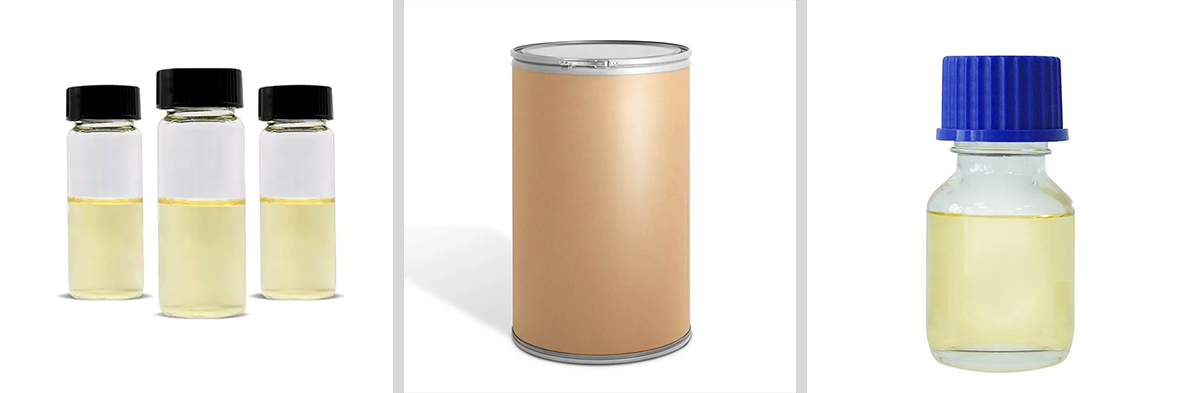
3,7-Dimethyl-7-hydroxyoctanal Chemical Properties
| Melting point | 22-23 °C |
| Boiling point | 257 °C(lit.) |
| density | 0.923 g/mL at 25 °C(lit.) |
| vapor pressure | 0.547Pa at 20℃ |
| refractive index | n20/D 1.448(lit.) |
| FEMA | 2583 | HYDROXYCITRONELLAL |
| Fp | >230 °F |
| storage temp. | Inert atmosphere,Store in freezer, under -20°C |
| solubility | Benzene (Slightly), Chloroform (Slightly), Methanol (Slightly) |
| pka | 15.31±0.29(Predicted) |
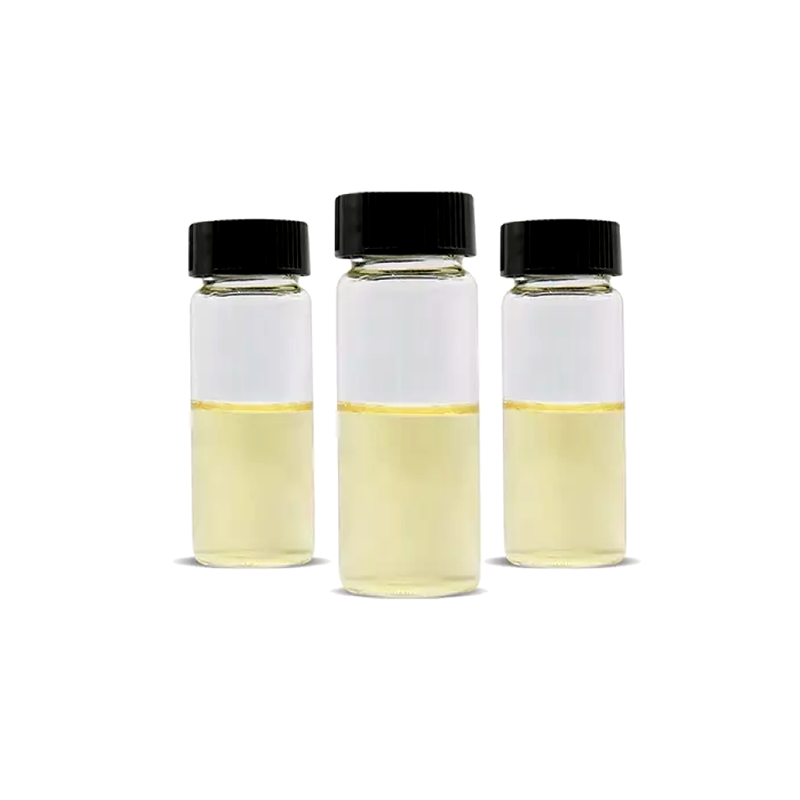
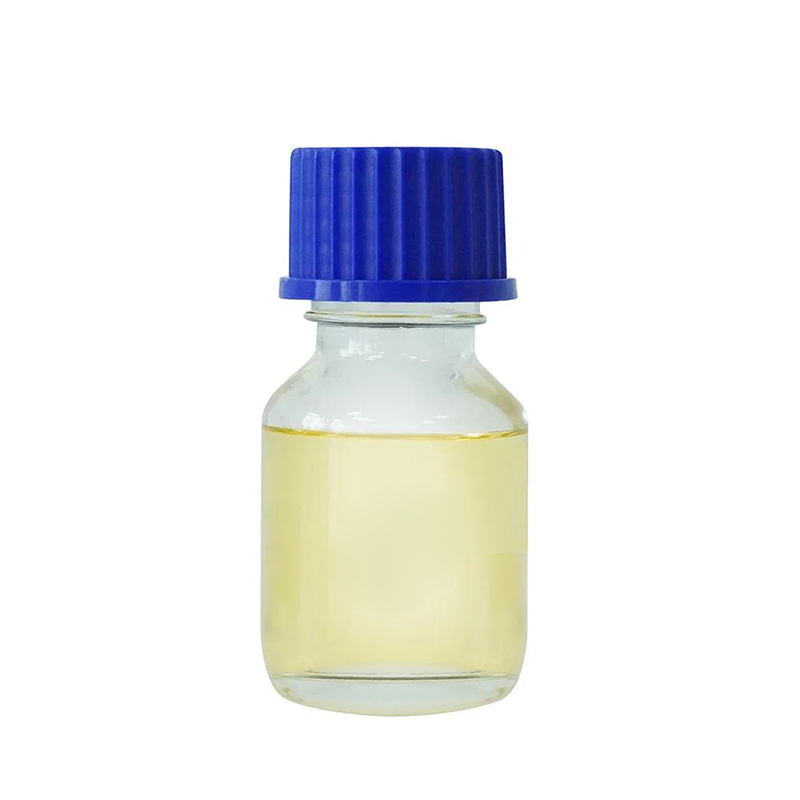
| form | Liquid |
| color | Clear colorless |
| Specific Gravity | 0.93 |
| Odor | at 100.00 %. floral lily sweet green waxy tropical melon |
| Odor Type | floral |
| biological source | synthetic |
| Water Solubility | 35g/L at 20℃ |
| JECFA Number | 611 |
| Stability: | Air Sensitive |
| Major Application | flavors and fragrances |
| Cosmetics Ingredients Functions | PERFUMING |
| InChI | 1S/C10H20O2/c1-9(6-8-11)5-4-7-10(2,3)12/h8-9,12H,4-7H2,1-3H3 |
| InChIKey | WPFVBOQKRVRMJB-UHFFFAOYSA-N |
| SMILES | [H]C(=O)CC(C)CCCC(C)(C)O |
| LogP | 1.68 at 25℃ |
| CAS DataBase Reference | 107-75-5(CAS DataBase Reference) |
| NIST Chemistry Reference | Hydroxycitronellal(107-75-5) |
| EPA Substance Registry System | Octanal, 7-hydroxy-3,7-dimethyl- (107-75-5) |
| Hazard Codes | Xi |
| Risk Statements | 38-41-43 |
| Safety Statements | 26-39-36/37 |
| RIDADR | UN1230 - class 3 - PG 2 - Methanol, solution |
| WGK Germany | 1 |
| RTECS | RG7850000 |
| TSCA | TSCA listed |
| HS Code | 29124990 |
| Storage Class | 10 - Combustible liquids |
| Hazard Classifications | Eye Irrit. 2 |
| Skin Irrit. 2 | |
| Skin Sens. 1 |

Product Application of 3,7-Dimethyl-7-hydroxyoctanal CAS#107-75-5
Hydroxycitronellal is widely used as a fragrance ingredient in various perfumes, antiseptics, insecticides, and household products. In perfumery, it is used to create a variety of fragrance profiles, including sweet pea (Pois de Senteur), gardenia, cherry, melon, and mint notes.