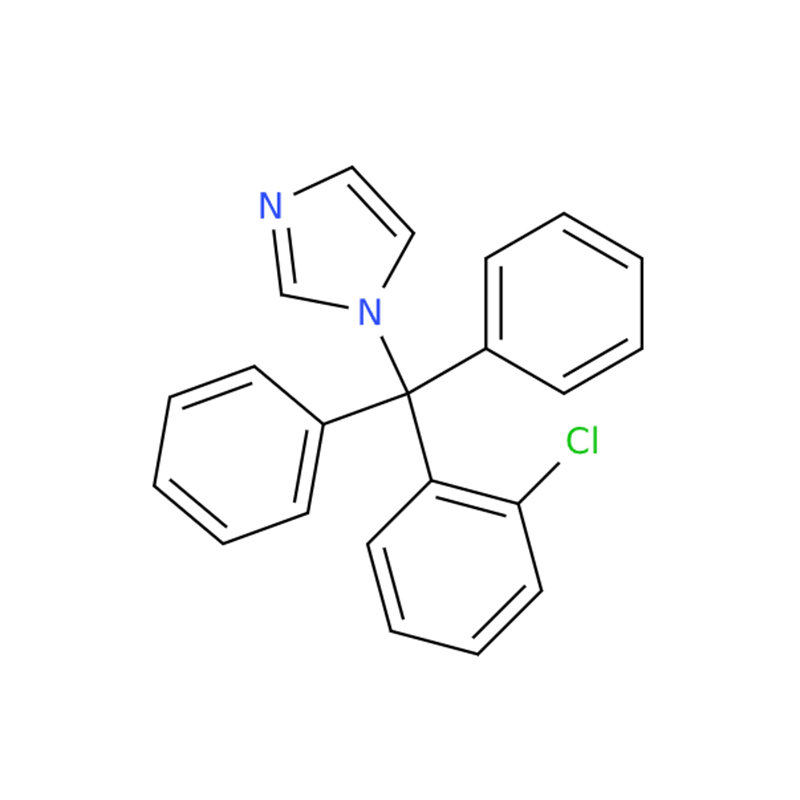

Clotrimazole CAS#23593-75-1
Payment Terms: T/T only for orders. Please contact us for detailed payment terms and order requirements.
Broad-Spectrum Antifungal Activity – Clotrimazole is an imidazole antifungal agent active against a wide range of fungal forms and effective against various types of fungal infections.
Strong Target Binding Affinity – Clotrimazole tightly binds sterol 14-α demethylase isoform B from A. fumigatus, with a reported KD of 103 nM.
Effective Fungal Membrane Disruption – Like other imidazole antifungals, clotrimazole disrupts fungal cell membrane function, contributing to its antifungal activity.
Potent Potassium Channel Inhibition – In mammalian cells, clotrimazole potently inhibits the calcium-dependent potassium channels Kv1.3 and IK-1, with IC50 values of 6.0 and 0.07 μM, respectively.
Clotrimazole is an imidazole antifungal agent that is active against a wide range of fungal forms and effective against various types of fungal infections. It tightly binds to sterol 14-α demethylase isoform B from A. fumigatus, with a reported KD of 103 nM. Like other imidazole antifungal agents, clotrimazole disrupts fungal cell membrane function. In mammalian cells, clotrimazole also potently inhibits the calcium-dependent potassium channels Kv1.3 and IK-1, with IC50 values of 6.0 and 0.07 μM, respectively.
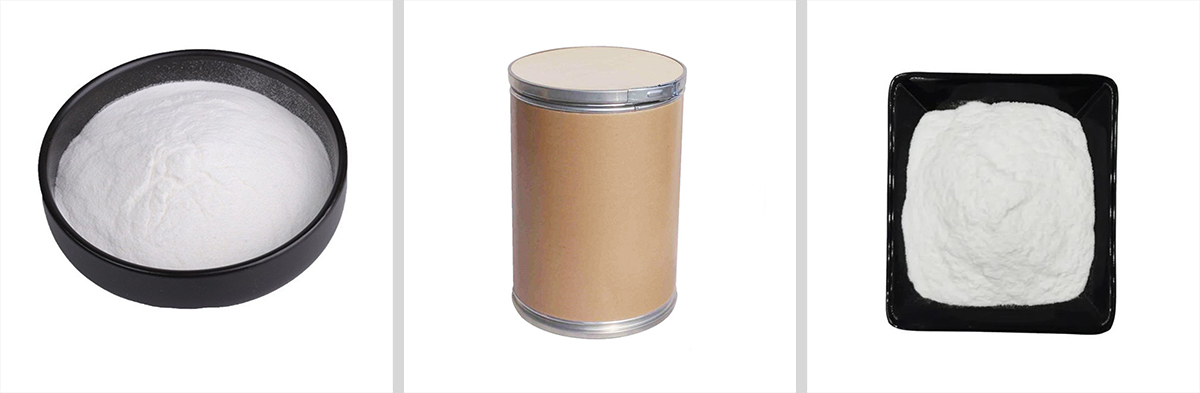
Clotrimazole Chemical Properties
| Melting point | 147-149°C |
| Boiling point | 501.14°C (rough estimate) |
| density | 1.1095 (rough estimate) |
| refractive index | 1.5940 (estimate) |
| storage temp. | 2-8°C |
| solubility | Soluble in chloroform, DMSO, DMF and alcohols |
| pka | pKa 4.7(EtOH 50%aq ) (Uncertain) |
| form | Solid |
| color | White to Almost white |
| Water Solubility | <10mg/L(25 ºC) |
| λmax | 556nm(Phosphate buffer sol.)(lit.) |
| Merck | 142417 |
| Major Application | pharmaceutical |
| pharmaceutical small molecule | |
| Cosmetics Ingredients Functions | ANTIMICROBIAL |
| ANTI-SEBORRHEIC | |
| InChI | InChI=1S/C22H17ClN2/c23-21-14-8-7-13-20(21)22(25-16-15-24-17-25,18-9-3-1-4-10-18)19-11-5-2-6-12-19/h1-17H |
| InChIKey | VNFPBHJOKIVQEB-UHFFFAOYSA-N |
| SMILES | C1N(C(C2=CC=CC=C2Cl)(C2=CC=CC=C2)C2=CC=CC=C2)C=CN=1 |
| NIST Chemistry Reference | Clotrimazole(23593-75-1) |
| Hazard Codes | Xn |
| Risk Statements | 22-36/38 |
| Safety Statements | 26-36 |
| WGK Germany | 3 |
| RTECS | NI4377000 |
| HS Code | 29332900 |
| Storage Class | 11 - Combustible Solids |
| Hazard Classifications | Acute Tox. 4 Oral |
| Aquatic Acute 1 | |
| Aquatic Chronic 1 | |
| Eye Irrit. 2 | |
| Skin Irrit. 2 | |
| Hazardous Substances Data | 23593-75-1(Hazardous Substances Data) |
| Toxicity | LD50 in male mice, rats (mg/kg): 923, 708 orally (Tettenborn) |

Product Application of Clotrimazole CAS#23593-75-1
Clotrimazole is clinically used in topical formulations, such as 1% creams or solutions, for the treatment of candidiasis, ringworm, tinea versicolor, athlete’s foot, nail ringworm, and other skin infections. Clotrimazole vaginal tablets (100 mg) can be administered for the treatment of candidiasis and trichomoniasis vaginal infections. Local irritation and a burning sensation may occur as side effects. Oral administration may be used to treat deep fungal infections, but it may cause serious side effects, including gastrointestinal irritation, neutropenia, and abnormalities in liver function.
Oral Administration:
(1) Clotrimazole can be used for the treatment of oropharyngeal candidiasis.
(2) It can also be used during chemotherapy and for the prevention of oropharyngeal candidiasis in immunocompromised or immunodeficient patients.Topical Administration:
(1) Skin candidiasis.
(2) Tinea, jock itch, and ringworm caused by Trichophyton, Epidermophyton, and Microsporum species, as well as tinea versicolor caused by Pityrosporum.Vaginal Administration:
(1) Vaginitis caused by Candida or other fungi.
(2) Vaginal infections caused by yeast.
(3) Vaginal superinfection caused by drug-susceptible strains.