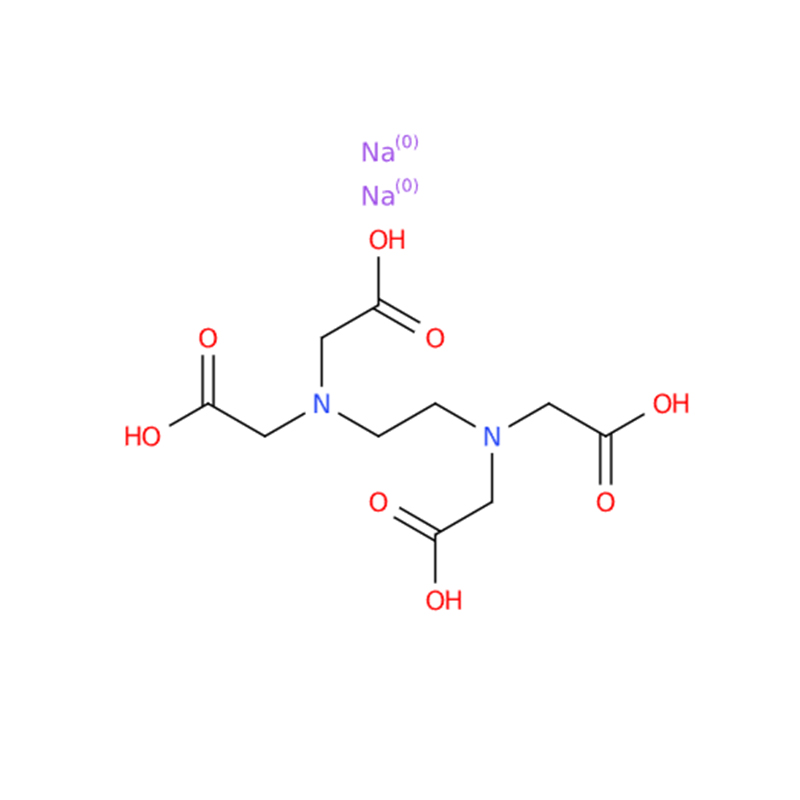
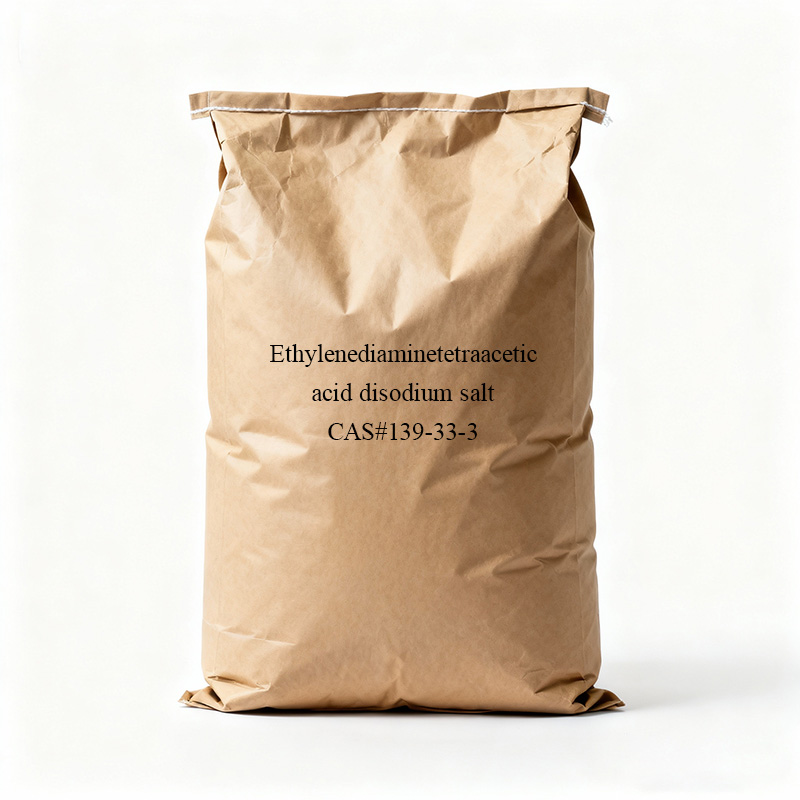


Ethylenediaminetetraacetic acid disodium salt CAS#139-33-3

  • Excellent Chelating Capability: Demonstrates strong metal ion binding ability, making it highly effective as a chelating agent in various industrial and commercial applications.

  • Wide Range of Industrial Applications: Widely used in cosmetics, food, textiles, paper manufacturing, synthetic rubber production, and other industries due to its versatile performance.

  • Superior Stabilizing and Preservative Performance: Functions as a preservative, sequestrant, and stabilizer in food formulations, helping improve product stability and quality.

  • Effective Metal Ion Control Function: Helps prevent unwanted reactions caused by metal impurities, such as color changes in textiles, hydrogen peroxide decomposition in paper bleaching, and corrosion in industrial systems.


Contact Now E-Mail Telephone WhatsApp
Product Details

Product Description of Ethylenediaminetetraacetic Acid Disodium Salt CAS#139-33-3

Ethylenediaminetetraacetic acid (EDTA) is widely utilized in various industrial applications due to its excellent ability to form stable complexes with most metal cations. EDTA is available in several salt forms, including ethylenediaminetetraacetic acid disodium salt (EDTAS).

EDTA and its salts are commonly used as chelating agents in cosmetic formulations. EDTAS functions as a preservative, sequestrant, and stabilizer in food applications. It is also added to soft drinks containing ascorbic acid and sodium benzoate to help reduce benzene formation.

In the food packaging industry, EDTA and its salts are used as components in the production of food-contact paper and paperboard. EDTAS is also approved for use in animal feed, drinking water, and the treatment of food-producing animals.

Within the textile industry, EDTA and its salts help prevent metal ion impurities from affecting the color stability of dyed products. In the pulp and paper industry, they inhibit metal ions from catalyzing the decomposition of hydrogen peroxide during bleaching processes.

Additionally, EDTAS is applied in synthetic rubber manufacturing and serves as a corrosion inhibitor for carbon steel in industrial systems. EDTA disodium salt and tripotassium EDTA salts are also widely used as anticoagulant agents.

Ethylenediaminetetraacetic acid disodium salt CAS#139-33-3

Ethylenediaminetetraacetic acid disodium salt Chemical Properties

Melting point 248 °C (dec.)(lit.)
Boiling point >100 °C
density 1.01 g/mL at 25 °C
vapor pressure 0Pa at 25℃
refractive index n20/D 1.363
storage temp. 2-8°C
solubility H2O: clear, colorless
form solution
color ≤5 (0.5 M)(APHA)
Odorat 100.00?%. odorless
PH8.0±0.2
Water Solubility Miscible with water.
BRN 3822669
Stability:Hygroscopic
Cosmetics Ingredients FunctionsCHELATING

VISCOSITY CONTROLLING
LogP-4.3 at 25℃
CAS DataBase Reference139-33-3(CAS DataBase Reference)
EPA Substance Registry SystemEthylenediaminetetraacetic acid disodium salt (139-33-3)
Absorptioncut-off at 268nm
Hazard Codes Xn,C
Risk Statements 36/38-36/37/38-22-34-21/22
Safety Statements 26-36-37/39-45-36/37/39-36/37
WGK Germany 2
RTECS AH4410000
TSCA Yes
HS Code 29224999
Hazardous Substances Data139-33-3(Hazardous Substances Data)
Toxicitymouse,LD50,intraperitoneal,260mg/kg (260mg/kg),Nippon Yakurigaku Zasshi. Japanese Journal of Pharmacology. Vol. 52, Pg. 126S, 1956.

Ethylenediaminetetraacetic acid disodium salt CAS#139-33-3

Product Application of Ethylenediaminetetraacetic Acid Disodium Salt CAS#139-33-3

Ethylenediaminetetraacetic acid (EDTA) is an aminopolycarboxylic acid and a hexadentate ligand with strong metal-chelating ability. It forms stable octahedral complexes by binding with metal ions, particularly cations.

Ethylenediaminetetraacetic acid disodium salt (EDTAS) is commonly used as a blood anticoagulant. By chelating calcium ions in blood, it helps inhibit coagulation and is widely applied in hematological testing. It also enhances the antibacterial activity of lysozyme.

In chelation therapy, EDTA binds with calcium ions and may contribute to arterial dilation and the solubilization of atheromatous plaques associated with atherosclerotic vascular disease. EDTA chelation therapy may also provide protection against oxidative damage related to blood and lipid peroxidation in liver fibrosis.

Ethylenediaminetetraacetic acid disodium salt CAS#139-33-3

Leave your messages

Related Products

x

Popular products

x