
Products Description of 2-Methyl-4-isothiazolin-3-one CAS#2682-20-49
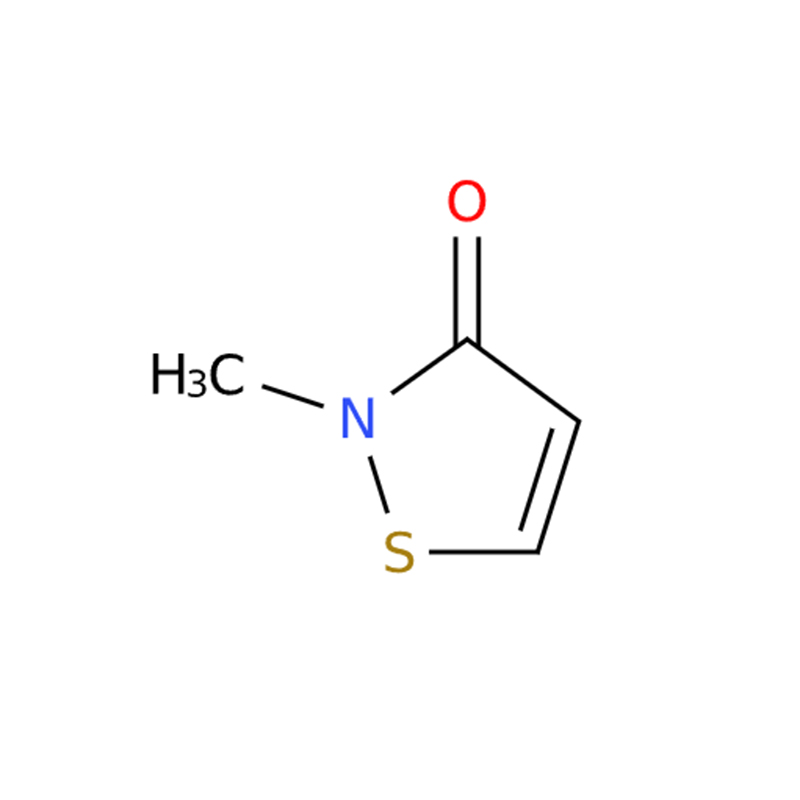
Methylisothiazolinone (MIT) is a new-generation fungicide introduced to China from Europe. As an isothiazolinone-based organic compound, it can effectively inhibit the growth and reproduction of a wide range of microorganisms, including bacteria, fungi, and yeast, making it a widely used broad-spectrum antimicrobial agent.
Compared with other types of fungicides, isothiazolinone fungicides demonstrate outstanding advantages, including significant antimicrobial effects, rapid action in controlling microbial growth and metabolism, and effective prevention of biofilm formation.
Parameters
| Melting point | 254-256 °C(lit.) |
| Boiling point | bp0.03 93° |
| density | 1.25 (14% aq.) |
| vapor pressure | <0.1 mm Hg ( 25 °C) |
| storage temp. | 2-8°C |
| solubility | Chloroform, Ethyl Acetate |
| form | Solid |
| pka | -2.03±0.20(Predicted) |
| color | Yellow |
| Water Solubility | 489g/L at 20℃ |
| BRN | 606203 |
| InChIKey | BEGLCMHJXHIJLR-UHFFFAOYSA-N |
| LogP | -0.486 at 20℃ |
| CAS DataBase Reference | 2682-20-4(CAS DataBase Reference) |
| NIST Chemistry Reference | 3(2H)-isothiazolone, 2-methyl-(2682-20-4) |
| EPA Substance Registry System | 2-Methyl-3(2H)-isothiazolone (2682-20-4) |
| Hazard Codes | N,C,T |
| Risk Statements | 50/53-50-43-34-20/21/22-37-23-22 |
| Safety Statements | 60-61-36/37/39-26-24-45 |
| RIDADR | UN 3077 9/PG 3 |
| WGK Germany | 2 |
| RTECS | FE1250000 |
| HazardClass | 8 |
| PackingGroup | III |
| HS Code | 29349990 |
| Hazardous Substances Data | 2682-20-4(Hazardous Substances Data) |

Product Application of 2-Methyl-4-isothiazolin-3-one CAS#2682-20-49
2-Methyl-4-isothiazolin-3-one (MIT) is widely used in various fields, including heterocyclic synthesis, organic chemical building blocks, and specialty chemical applications. It serves as an important component in daily chemical products such as cosmetics and detergents, as well as in pharmaceutical raw materials and biochemical engineering.
MIT is also applied as a fungicide, reference substance, and functional chemical raw material. It is utilized in the production of thiazole compounds, heterocyclic compounds, organic chemical intermediates, inorganic chemical materials, and other specialty formulations.