AES Market in China Expected to Maintain Steady Expansion: Sustainability Initiatives and Growing Demand Drive 2025 Growth Prospects
The global Alcohol Ether Sulfate (AES) market, a major anionic surfactant widely applied in detergents and personal care formulations, is experiencing steady growth driven by China’s expanding production capacity, increasing consumption, and rising export activity. Fueled by growing demand for efficient and environmentally friendly cleaning solutions, along with continuous progress in green manufacturing technologies, the industry is undergoing a transformation toward higher-purity and bio-based products while addressing challenges such as raw material price fluctuations and increasingly stringent environmental requirements. As one of the world’s leading AES producers and consumers, China’s market development, technological advancements, and export competitiveness are expected to play a crucial role in shaping the global AES industry landscape through 2030.
1. Market Overview: Stable Growth in Production and Consumption
China’s AES industry has maintained steady expansion, with production reaching approximately 1.38 million metric tons in 2024, representing a year-on-year growth of 6.3%. Apparent consumption also increased to around 1.35 million metric tons, up 5.8% compared with 2023, according to the 2025 China AES Surfactant Data Monitoring Report. The market is expected to continue its upward trend, with AES production forecast to surpass 1.48 million metric tons in 2025, maintaining a compound annual growth rate (CAGR) of approximately 6.5%.
On the global stage, China’s AES industry is becoming increasingly competitive, with exports reaching 215,000 metric tons in 2024, a year-on-year increase of 9.2%. Export growth has been mainly driven by demand from emerging markets across Southeast Asia, the Middle East, Africa, and South America. Within China, production capacity is mainly concentrated in coastal regions such as Zhejiang, Jiangsu, Guangdong, and Shandong. The top 10 manufacturers currently account for nearly 68% of total production capacity, reflecting a gradual increase in industry consolidation. Looking ahead, China’s AES demand is projected to reach 1.09 million metric tons by 2030, with the overall market value exceeding 9.64 billion yuan.
2. Application Expansion: Detergents Remain Dominant While Personal Care Accelerates
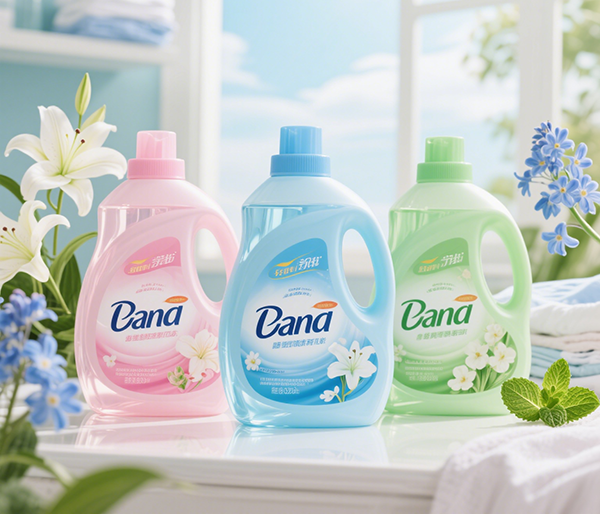
AES applications are primarily concentrated in daily chemical industries, with household detergents continuing to represent the largest consumption area. In 2024, detergent applications accounted for approximately 62% of total AES demand. Within this segment, the rapid growth of concentrated cleaning products, including liquid laundry detergents and laundry pods, has significantly increased demand for high-active AES products. Among them, liquid laundry detergents consumed around 456,000 metric tons of AES in 2024, representing 38.5% of downstream consumption. Dishwashing products ranked as the second-largest application sector, consuming approximately 217,000 metric tons annually, supported by the recovery of the food service industry and rising household cleaning demand.
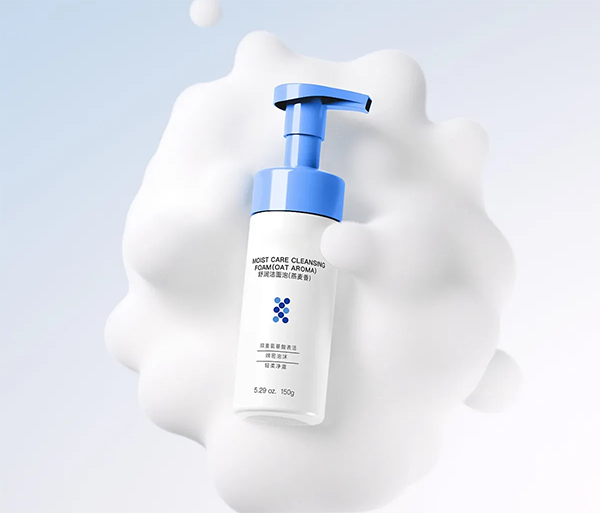
The personal care industry has become an important growth engine, contributing around 28% of total AES consumption. Demand is particularly increasing for mild, skin-friendly, and highly compatible AES products used in shower gels, facial cleansers, and children’s care products. AES products with low ethylene oxide (EO) addition levels of 2–3 have gained wider acceptance in baby care and sensitive skin formulations. High-end personal care applications accounted for 27% of AES market value in 2024, increasing by nearly 10 percentage points compared with 2020. Meanwhile, industrial cleaning applications, although representing a smaller share at approximately 10% of demand, continue to expand steadily in areas such as metalworking fluids, textile auxiliaries, and oilfield chemicals.
3. Technological Development: Enhanced Purity and Sustainable Production
The AES industry is experiencing significant technological upgrades in response to rising quality expectations and environmental requirements. Conventional sulfuric acid-based production methods are gradually being replaced by more sustainable technologies, including salt-free processes such as CO₂ neutralization. These advanced approaches help reduce inorganic salt content, improve product purity, and enhance environmental performance, meeting the growing demand for green-certified surfactant solutions from downstream industries.
Optimization of product structures has also become a major industry trend. Long-chain alcohol-based AES products (C12–C14), recognized for their excellent detergency, foam performance, and mildness, now represent more than 85% of the market. According to the 2024 China Surfactant Molecular Structure Database, AES products based on C12–C14 fatty alcohols with an EO addition number of 2.5 have become the dominant category, accounting for 78.6% of domestic production. Furthermore, advances in bio-based feedstocks have enabled early commercialization of AES derived from renewable resources such as palm kernel oil and coconut oil. Bio-based AES production is expected to exceed 30,000 metric tons in 2025, accounting for approximately 2% of total output.
4. Environmental Regulations: Accelerating Sustainable Industry Transformation
Increasingly stringent environmental regulations and China’s “dual carbon” targets—carbon peaking and carbon neutrality—are significantly influencing the future development direction of the AES industry. Approval processes for new production projects are becoming more rigorous, encouraging manufacturers to accelerate green transformation, improve resource efficiency, and adopt intelligent production systems. The introduction of the 2025 Environmental Audit Rules by the Ministry of Environment, Forest and Climate Change, featuring a two-level compliance framework supported by third-party verification, has further strengthened environmental management requirements for chemical producers.
AES benefits from inherent environmental advantages, including strong biodegradability, making it well positioned for growth under evolving regulatory standards. For example, AES residues in dishwashing products are generally below 0.1 mg/dm², meeting China’s GB 14930.1-2023 national food safety requirements. At the same time, downstream brands are placing greater emphasis on supply chain transparency and ESG (Environmental, Social, and Governance) performance, encouraging AES manufacturers to incorporate sustainability strategies throughout their production and operational processes.