1,3-Dihydroxyacetone CAS#96-26-4
Effective Skin Browning Agent: Dihydroxyacetone (DHA) is a widely used browning ingredient in cosmetic formulations, especially in sunless tanning products, providing an effective tanning effect without UV exposure.
Unique Chemical Reaction Capability: DHA participates in the Maillard reaction by reacting with amino groups in proteins, forming high molecular weight pigments that contribute to skin color development.
Broad Cosmetic Application Potential: Due to its excellent functional properties, DHA is widely applied in the development of self-tanning and personal care products.
Reliable Pharmaceutical Quality Control Standard: As a pharmaceutical secondary standard, DHA provides laboratories and manufacturers with a convenient and cost-effective reference material for quality control applications.
Product Description of 1,3-Dihydroxyacetone CAS#96-26-4
Dihydroxyacetone (DHA) is a browning agent extensively used in cosmetic products, including sunless tanning formulations. It undergoes a chemical coloring process known as the Maillard reaction, where it reacts with amino groups in proteins to form a mixture of high molecular weight pigments.
DHA can also serve as a pharmaceutical secondary standard for quality control applications, offering pharmaceutical laboratories and manufacturers a convenient and cost-effective alternative to preparing their own in-house working standards.
1,3-Dihydroxyacetone Chemical Properties
| Melting point | 75-80 °C |
| Boiling point | 107.25°C (rough estimate) |
| density | 1.1385 (rough estimate) |
| vapor pressure | 0.002-0.33Pa at 20-50℃ |
| refractive index | 1.4540 (estimate) |
| FEMA | 4033 | DIHYDROXYACETONE |
| storage temp. | Store at +2°C to +8°C. |
| solubility | >112.4 mg/mL in DMSO; >5.09 mg/mL in EtOH with ultrasonic |
| pka | 12.45±0.10(Predicted) |
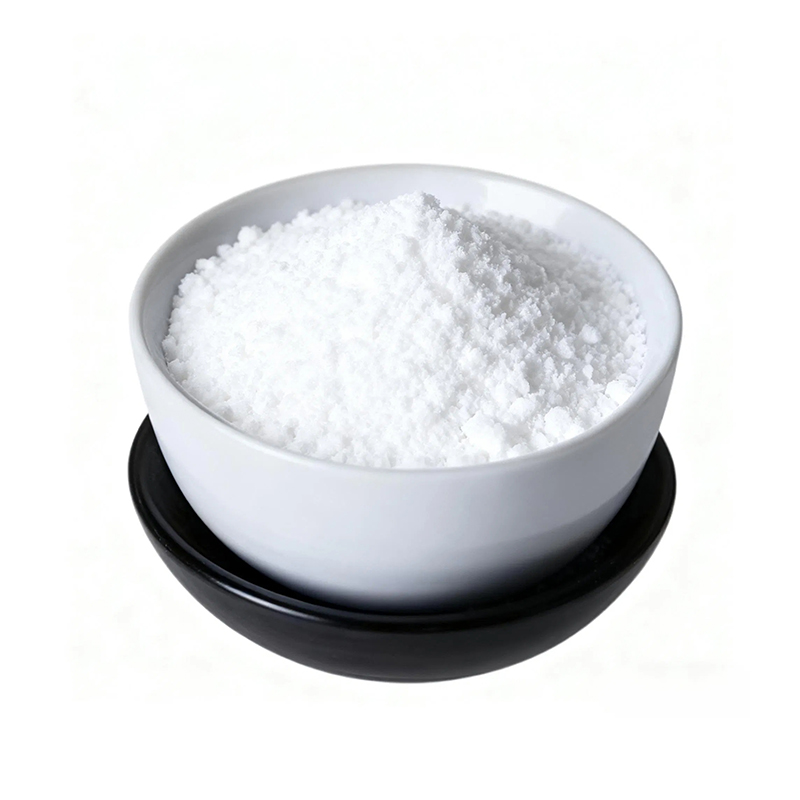
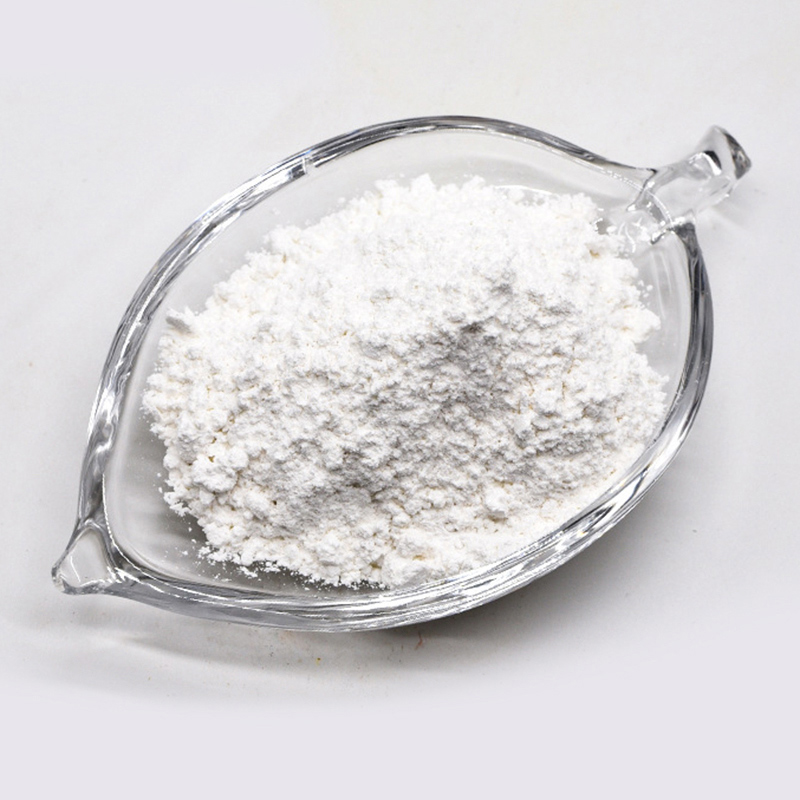
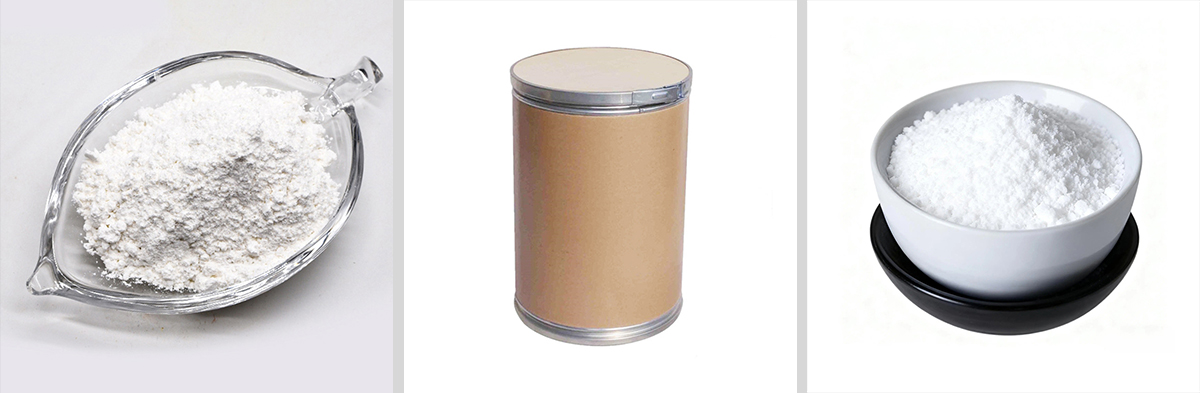
| form | powder |
| color | White |
| Odor | at 100.00 %. minty |
| PH | 4-6 (20°C, 50g/L in H2O) |
| Odor Type | minty |
| Water Solubility | >250 g/L (20 ºC) |
| JECFA Number | 1716 |
| Stability: | Stable. Combustible. Hygroscopic. |
| Cosmetics Ingredients Functions | HAIR DYEING |
| SKIN CONDITIONING - MISCELLANEOUS | |
| TANNING | |
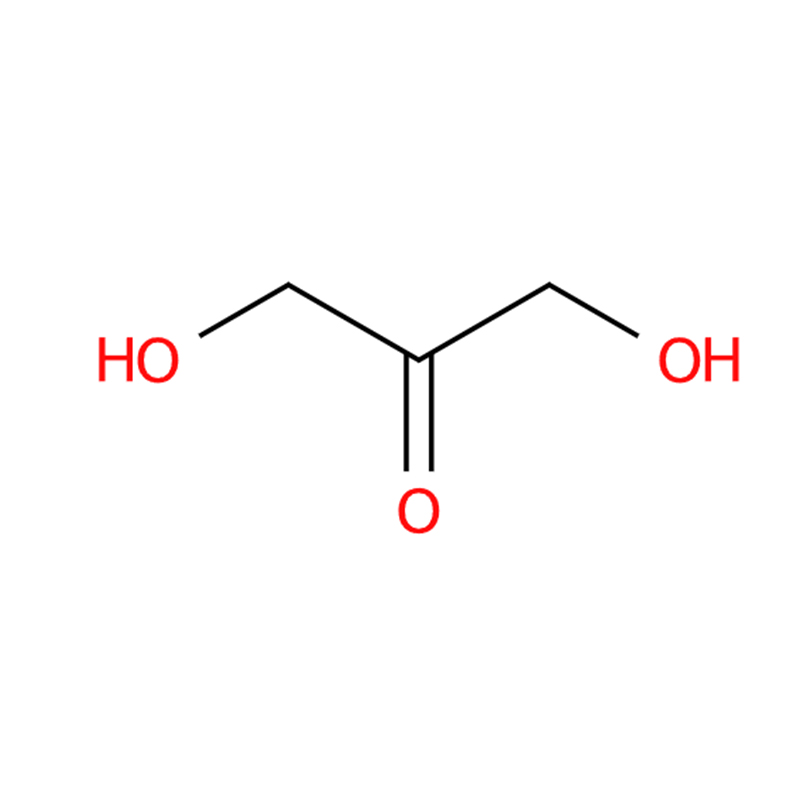
| InChI | 1S/C3H6O3/c4-1-3(6)2-5/h4-5H,1-2H2 |
| InChIKey | RXKJFZQQPQGTFL-UHFFFAOYSA-N |
| SMILES | OCC(=O)CO |
| LogP | -1.95 at 20℃ |
| Surface tension | 68.85mN/m at 1g/L and 20℃ |
| CAS DataBase Reference | 96-26-4(CAS DataBase Reference) |
| NIST Chemistry Reference | 2-Propanone, 1,3-dihydroxy-(96-26-4) |
| EPA Substance Registry System | 2-Propanone, 1,3-dihydroxy- (96-26-4) |
| Safety Statements | 24/25 |
| WGK Germany | WGK 1 |
| RTECS | UC1645000 |
| TSCA | TSCA listed |
| HS Code | 29141900 |
| Storage Class | 13 - Non Combustible Solids |
| Hazardous Substances Data | 96-26-4(Hazardous Substances Data) |
| Toxicity | CHROMELIN ? DIHYDROXYACETONE ? 1,3DIHYDROXYACETONE ? 1,3-DIHYDROXYPROPANONE ? DIHYXAL ? NSC-24343 ? OTAN ? OXATONE ? SOLEAL ? 2PROPANONE, 1,3-DIHYDROXY- ? TRIULOSE ? VITICOLOR |

Product Application of 1,3-Dihydroxyacetone CAS#96-26-4
1,3-Dihydroxyacetone (DHA) is a widely used cosmetic ingredient and food additive, as well as a versatile building block for the organic synthesis of various fine chemicals.
DHA is considered to have potential applications in areas such as weight management, fat metabolism regulation, antioxidant activity, and endurance enhancement. It also provides a safe and effective treatment option for recurrent vitiligo.
In addition, DHA has been developed as a highly efficient electrochemiluminescence co-reactant with Ru(bpy)₃²⁺. Its efficiency is approximately 25 times higher than that of the commonly used co-reactant sodium oxalate. Due to its excellent electrochemiluminescence performance, DHA enables sensitive detection without the need for derivatization. The electrochemiluminescence method demonstrates two linear response ranges of 5.0–500 μM and 500 μM–6.0 mM, with a detection limit of 1.79 μM.